
TL;DR
- SEO (search engine optimization) is how your business shows up when potential customers go looking for what you offer.
- It’s one of the highest-ROI marketing channels available to small businesses but it takes time, consistency, and the right strategy.
- If you’re a Midwest SMB not investing in SEO, you’re handing organic traffic and leads to competitors who are.
How Can Businesses in Minneapolis Stand Out?
A parent in Minneapolis is fussing over their child who broke their tooth at school. They pull out their phone, type “emergency dentist Minneapolis,” and call the first business that shows up. They don’t scroll to page two. They never will and neither would you.
That’s SEO in the real world. Whether your business shows up in that moment is determined by work you did (or didn’t do) months before they ever started typing.
eMod has been delivering SEO services for businesses across Minnesota and the Midwest since 2012. We’ve watched the channel evolve, adapt to major algorithm shifts, and consistently outperform almost every other form of marketing for businesses willing to commit to it.
What Is SEO?
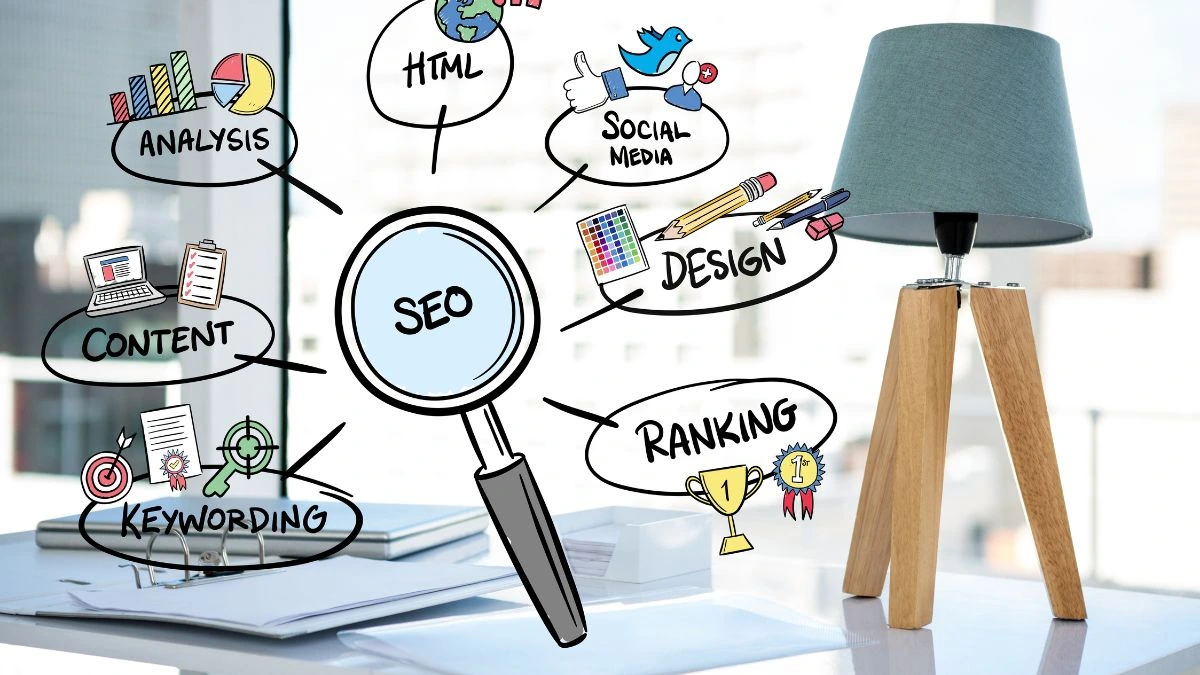
Search engine optimization is the routine of making your website more visible in organic search results on Google and other search engines.
When someone searches for a product, service, or answer online, search engines rank the most relevant and trustworthy results at the top. SEO is the work that helps your pages earn those spots. This is not about your ad spend and your cost per click. SEO is a sustained visibility that brings you benefits over time. You have to nurture and keep up with it.
Organic search drives 53% of all trackable website traffic globally, and Google alone processes more than 8.5 billion searches per day. Your customers are out there. The question is whether they’re finding you or your competitors.
What are the Three Pillars of SEO?
SEO is broadly three disciplines that work together. When you take the time to understand how you can wield each of them, you begin asking the right questions and prioritize the right fixes.
1. On-page SEO
This is everything that you visibly own, i.e., it’s on your website. That means it includes the words on your pages, your headings, title tags, internal links, and how well your content matches what people around you are actually searching for. That means if someone searches for “funeral flowers in Minnetonka:, your website needs to pick up on that and show up (and credibly so). This is where most businesses start their SEO efforts. This is your online real estate: you’ve got to furnish it in the best way.
2. Technical SEO
This is the foundation and behind-the-scenes work. This type of SEO includes how fast your site loads, whether it performs properly on mobile and whether Google can crawl and index your pages with ease. Without a focus on technical SEO, you can have the most beautiful prose on your website and still rank poorly. A slow site, broken links, or duplicate pages can suppress rankings and set you back for months (because everything looks fine).
3. Off-page SEO
This is about building authority, sometimes painstakingly. Off-page efforts are kind of like building goodwill in the online space. Google evaluates whether other credible websites trust and link to yours. Backlinks from relevant sites, local business citations, customer reviews, and press mentions all put out trust signals into the digital universe.
All three matter. Businesses that only focus on content while neglecting technical issues, or chase backlinks without improving their on-page foundations, tend to stall.
The ROI Case: Why Does SEO Matter?
People who find you through organic search are already looking for what you offer. Their fingers are itching to make a purchase and they’re coming to you ‘pre-qualified’ in a way a cold call or a billboard can never achieve.
SEO leads are won at a 14.6% rate, compared to just 1.7% for outbound marketing. That’s nearly a 9x difference in close rate. Even better, the financial returns only expand over time. SEO campaigns generate more than 700% ROI (depending on your approach) for businesses running long-term strategies, with most reaching positive ROI within 6 to 12 months.
Unlike paid advertising (where traffic comes to a halt the moment your budget does) a page that ranks today keeps driving leads two years from now without another dollar of spend. For B2B businesses specifically, organic search generates 44.6% of all revenue. That’s more than any other single channel.
What Local SEO Looks Like for Midwest Businesses
Per Search Engine Roundtable, 46% of all Google searches have local intent. People are specifically looking for businesses near them. For Midwest SMBs serving a regional market, local SEO is usually where the fastest, most direct ROI lives.
Here’s what that looks like in practice across a few real business types:
- A dental clinic in Bloomington. They noticed that “dentist accepting new patients near me” was one of the most common local searches in their area…and that their website said nothing about availability. They updated their homepage copy, added an FAQ page addressing insurance questions, and started asking every new patient to leave a Google review mentioning the specific service they came in for. Within six months, they ranked in the top three for their core search terms and cut their cost-per-new-patient significantly compared to what they’d been spending on mailers.
- A PPF and window tinting shop in the western suburbs. Their old website had no location-specific content, just a generic services page that didn’t mention Minnetonka, Eden Prairie, or Chaska anywhere. They added individual pages for each service area, built citations in local car enthusiast forums and published a short guide on “how to pick the right paint protection film for Minnesota winters.” That last piece alone started ranking for a cluster of high-intent terms and now drives a consistent stream of inbound calls from car owners who found it while researching.
- A commercial landscaping company serving the Minneapolis-St. Paul metro. They created a Google Business Profile specifically for their commercial division, separate from their residential one, and optimized it for terms property managers actually search: “commercial snow removal contract Minneapolis,” “HOA lawn care St. Paul.” They also reached out to three local property management associations for directory listings. Those two moves, neither of which cost anything beyond time, moved them into the Map Pack for their highest-value search terms.
The common thread: none of this is accidental. These businesses made calculated decisions about content, technical structure, and their online presence.
An SEO Partner Who Enables Your Growth Journey
No matter the type of SEO and marketing strategy you’re looking at, the right answer is almost always the right combination, executed well. SEO is a long game, but one of the few marketing investments that pays you back for years of work you do once.
eMod has been building and executing SEO strategies for businesses across Minnesota and the Midwest since 2012. As locals ourselves, we’re passionate about and familiar with the local landscape, the regional competitive dynamics, and how to build rankings that hold through algorithm changes.
If you’re ready to stop handing your organic traffic to competitors, let’s talk.
Call us: (612) 616-4200
Email: info@e-mod.com
Frequently Asked Questions
Most SEO campaigns attain positive ROI within 6 to 12 months. The actual timeline for success with SEO depends on your industry, the level of competition, your starting point, and how consistently the strategy is executed. Local markets with moderate competition often show meaningful movement faster than highly contested national terms.
SEO earns organic rankings and traffic continues even when you’re not spending. Paid search (PPC, or search engine marketing) brings visibility at the top of results and charges each time someone clicks. SEO is a long-term strategy while the success of paid search is dependent on your budget.
Yes, ChatGPT can do an SEO audit for your website, but it has notable limitations. It cannot natively crawl your entire website or check server speeds like dedicated tools, so it acts as an intelligent audit assistant rather than a complete, all-in-one solution. You need a combination of tools and experts to run a complete (and regular) audit.