TL;DR
- Template websites offer the benefits of speed and affordability but because they’re built for everyone, they’re optimized for no one (in specific).
- Custom web design and development give your business a site that’s built around your actual customers and competitive landscape.
- For businesses serious about growth, a custom site is essential infrastructure.
How to Build a Good Brand Website
Your business is your storefront. Your online home. Your brand story.
It’s That™ asset and you can’t really afford to be boring and uninspired with it, especially in 2026. But what happens if you need it…kinda quick? The path is clear: pick a template, input your logo, and dress it up in your brand colors. Throw in a sprinkle of copy and garnish with a couple of redirects. You’re ready to launch!
At eMod, we’ve met our fair share of businesses that really took their time with Squarespace, Wix, and WordPress theme marketplaces. They swear they found The One. That’s fine in a couple of cases: a freelancer, a pop-up event page, a beta test for a new product. These are WIPs, and you don’t want to hard commit with them.
But if you’re running a real business in a competitive market, a web design agency that builds from a template is building you what you can think of as the fast fashion of websites.
Here’s what those tradeoffs actually cost, and why an increasing number of Midwest SMBs are choosing custom web design and development instead.
What Is Custom Web Design and Development?
We’ve been building websites for companies since 2012. Let’s expand on what we mean by “custom”.
- Custom web design means your site’s visual design is built from scratch around your brand, your audience, and your conversion goals. So there are no pre-decided layouts or generic stock photos. We’re painting on a fresh canvas.
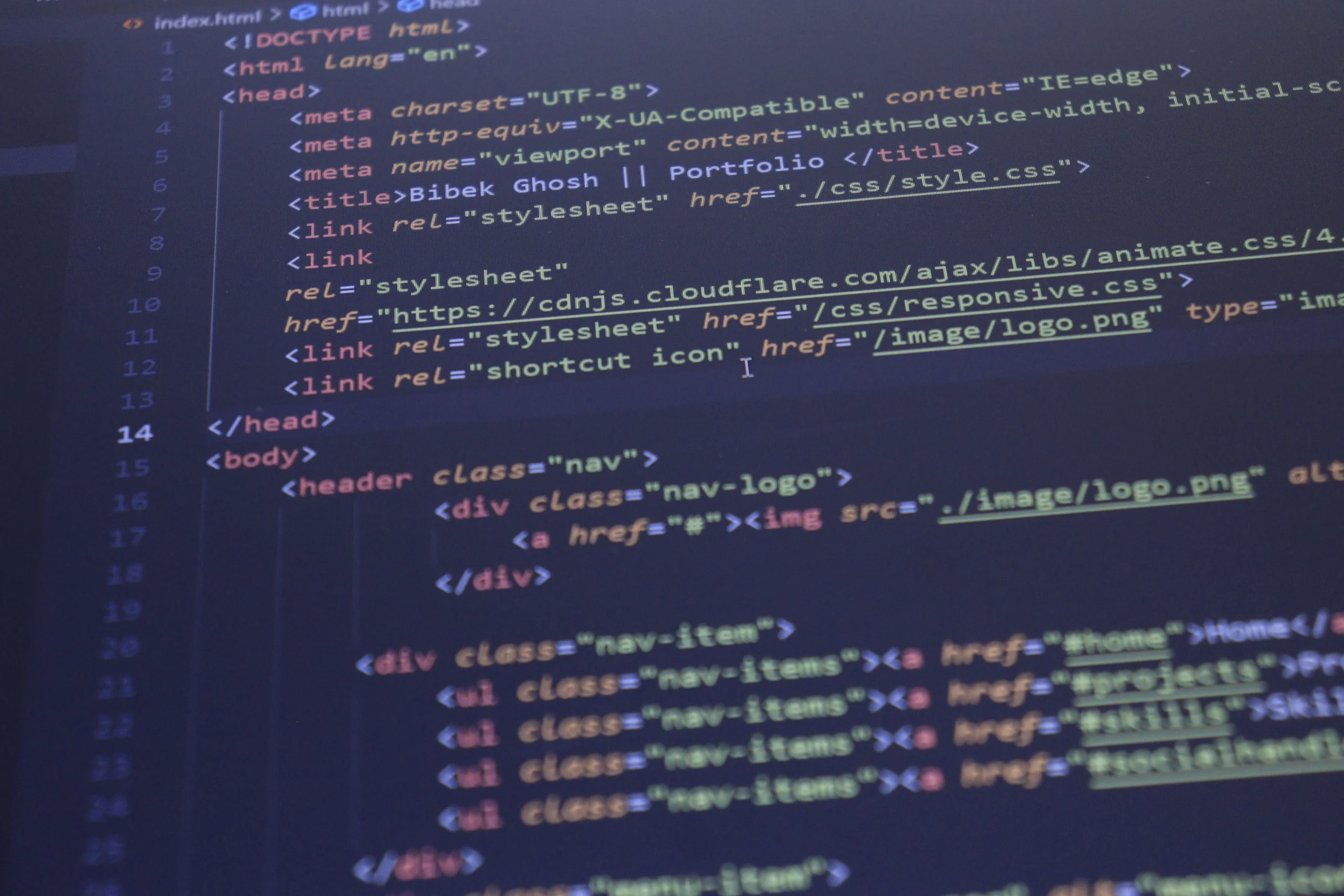
- Custom website development means the code underlying your site is written specifically for your use case. It’s a site architected to do exactly what your business needs it to do, nothing more, nothing less, with no bloated code from features you’ll never use.
- Custom web design and development together mean a site where design and function are built in tandem, by people who understand both sides, so the end result looks right and performs right.
5 Reasons Businesses Choose Custom Websites Over Templates
According to Adobe, a whopping 71% of consumers expect a personalized web experience, but only 34% of brands are successfully delivering that for them. You need to join this club. Here’s why the most successful brands opt for customized website design and development:
1. You’re Not Generic So Your Website Shouldn’t Be Either
Template sites are handy because they’re built to serve thousands of different businesses across dozens of different industries. That versatility becomes a bane when we get down to the specifics.
With custom website design, you get a visual identity that’s yours alone. The typography, color system, layout hierarchy, imagery approach, and interaction design all reinforce who you are and what you stand for. That consistency builds recognition and recognition builds trust. And you can invest in other business strategies as much as you want; it ultimately all comes down to trust.
When a potential buyer comes to your site, you have seconds to communicate that it is worth their time. You need to create impact.
2. Custom Sites Are Built for Performance, Not Just Appearance
Template sites carry significant technical baggage. They’re bloated with features you’ll never use, plugins that conflict with each other, and design elements that slow down load times.
Think about the last time you waited more than 1 second for a website to load. Site speed is a key conversion factor. Per Contentsquare, designs that successfully encourage users to view just 10% more content (we call that session depth) see a corresponding 5.4% increase in conversion rates.
Responsive custom website design carries only the code it needs. That means you don’t have to deal with dead weight or performance drag from a random person’s design decisions.
3. Mobile-Friendly Website Design Can’t Be an Afterthought
In the first three months of 2026, mobile devices made up 52.27% of global website traffic (Statista).
Template sites often especially claim mobile responsiveness, but more often than not, “responsive” in a template context means the desktop layout has been shrunk to fit a smaller screen. That’s not the same as a site designed mobile-first, where every interaction, every content hierarchy decision is made with a phone user in mind.
Mobile-friendly website design done properly through a custom build means your mobile experience is as deliberate as your desktop experience.
4. SEO Requires a Good Foundation (Missing in Templates)
Search engine optimization starts at the code level. You know the drill: clean HTML structure, proper heading hierarchy, fast load times, schema markup, crawlable architecture. You can’t begin thinking of these later.
Professional web design services give you a site that’s architected for search from day one.
- Clean, semantic code that search engines can read and index efficiently
- Page structures that support your keyword strategy
- A site architecture that distributes authority across your pages
Template sites can be SEO-optimized to a certain degree. But you want to be able to do better than just passable.
5. Security and Ownership Are Clearer
Template platforms like Squarespace make launching a website easy, but they also mean buying into someone else’s ecosystem. If the platform changes its pricing, retires a feature, or shifts its product offering, your website and business may have to adapt too.
Tailored business website design gives you full ownership of your codebase. Instead of “renting” a platform, you own an asset.
Template platforms are also high-value targets for attacks because they’re used at scale. A custom codebase with no unnecessary third-party dependencies has a smaller attack surface.
Custom vs. Template Websites
| Factor | Template Site | Custom Build |
| Design uniqueness | Shared with thousands of other businesses | Built exclusively for your brand |
| Page speed | Often bloated with unused code | Lean, purpose-built codebase |
| SEO foundation | Limited by platform constraints | Architected for search from the start |
| Mobile experience | Scaled-down desktop layout | Designed mobile-first |
| Scalability | Hits limits as business grows | Built to expand with your needs |
| Integration flexibility | Platform-dependent | Connects to your actual tools |
| Ownership | Platform-controlled | Fully yours |
| Conversion optimization | Generic layout defaults | Built around your specific customer journey |
Build a Better Digital Presence
A website should do more than look good. If visitors leave without taking action, struggle to navigate on mobile, or fail to connect with your brand, the impact goes beyond design. It affects how effectively your website supports your business goals.
Custom web design and development is how businesses stop treating their website as a cost center and start treating it as a growth asset.
For over 12 years, eMod has built custom websites for businesses across Minnesota and the Midwest. We plan with your audience in mind, creating websites that build trust and support long-term business growth.
If your current website isn’t pulling its weight, let us paint you a better picture.
Call us: (612) 616-4200
Email: info@e-mod.com
Frequently Asked Questions
Template platforms like Squarespace or Wix run $65 per month, and premium WordPress themes cost $50 to $200 as a one-time purchase. Custom builds for small to mid-sized business projects fall between $5,000 and $10,000, with complex builds running higher. However, a well-built custom site typically lasts five to seven years before needing significant updates, while template platforms charge ongoing fees, limit functionality without expensive add-ons, and often require a full rebuild when your business outgrows them.
Timelines for custom website development depend on scope. A custom website for a small or mid-sized business typically takes eight to sixteen weeks from discovery through launch. More complex builds involving e-commerce, custom integrations, or large content libraries take longer.
Yes, in most cases, a custom website is better for SEO. You have full control over your site’s technical architecture, code cleanliness, page speed, and structural hierarchy, all of which are foundational to search engine performance.